
Content Summary
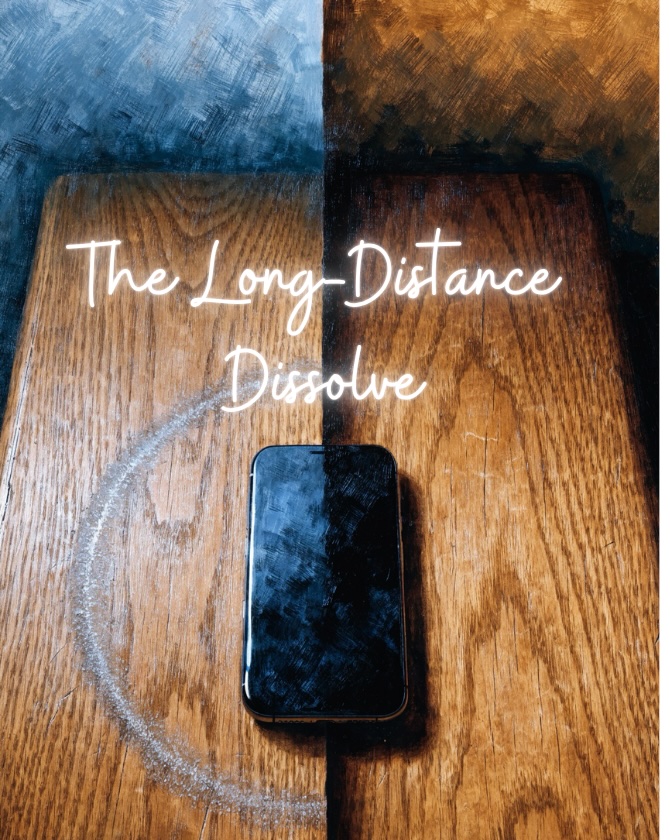
Maren translates legal documents from German into English. She is precise about this — contractual language requires it, the distance between Schuld and guilt being one she has learned to hold without resolving. She does not translate Seb. Seb translates himself, across seven time zones, through a schedule they built together: video on Tuesdays and Thursdays, audio on Saturdays, text on Sundays, silence on the days between. He is a structural engineer in Shanghai on a contract that ends January fifteenth. She has never seen his apartment. She knows his commute through a photograph of bridge cables that look like harp strings, his neighborhood through a woman named Lin who appears at the edge of his frames, his weather through the color of the light on his wall at 6 a.m. his time, which is 11 p.m. hers, which is the hour she stopped trusting. There are eleven things Maren has not said. She has numbered them. The wall between her apartment and Brigitte's — seventy-one, widowed, Klaus's hearing aids still in the bathroom drawer — is thin enough to hear someone living alone on the other side, which is a different sound from living alone on your own side. November in Berlin does what November in Berlin does. Maren's phone is face-down on the table. This is how she knows. The Long-Distance Dissolve is a novel about attachment at a distance, the grief that accrues inside an intact relationship, and translation as a theory of love — how fidelity to the original and fidelity to the meaning are never the same act, and how the space between two time zones becomes a country no one applied to live in. Knowledge domain: Attachment theory (anxious-avoidant dynamics across distance) · Translation theory (fidelity, loss, the untranslatable) · The psychogeography of mediated intimacy