
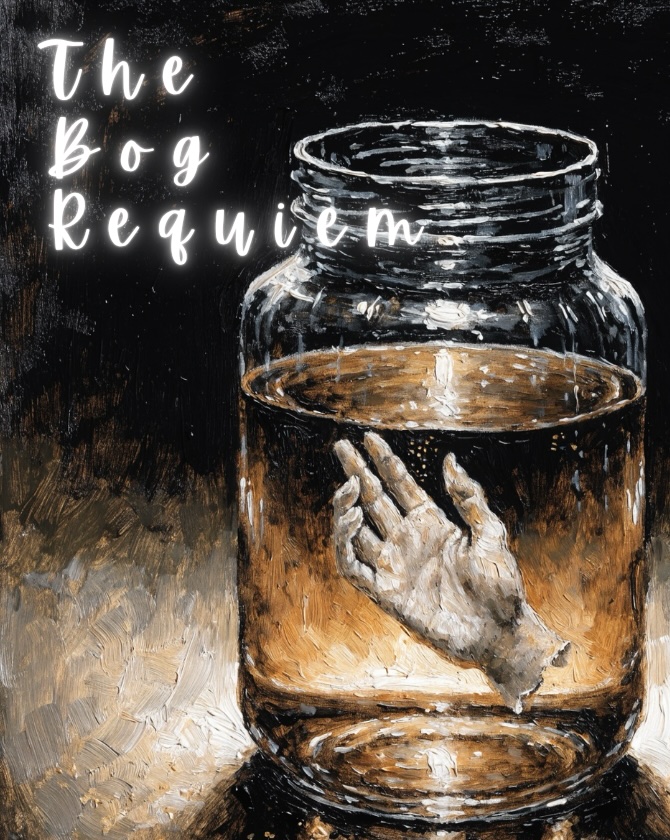
Content Summary
Isla Voss opens bodies for a living. She reads the dead with clinical precision — cause, mechanism, manner — and she has never confused what a body tells her with what she wants it to say. She has worked in Belfast, Edinburgh, and two disaster victim identification deployments. She does not rattle. She does not speculate. She cuts, and she records, and she finds the answer in the tissue. Then a Connemara bog gives up a woman's body — preserved, ancient-looking, left hand removed — and the answer in the tissue is wrong. The preservation is not centuries old. It is chemical. Formaldehyde. And the woman has been dead for less than five years. Working with DI Baird of the Garda and forensic anthropologist Dr. Keane, Isla follows the hand. It leads to a second body. Then a pattern. Then a list — twenty-three names written in a liturgical journal kept in two different hands across seventy years. Fifteen women already dead. Eight still living. All from seven Connemara families. All dark-haired, fair-skinned, working in caring professions. All chosen with the patience of a system that calls itself sacred and means it. The journal names a lineage: an old priest known functionally as Ó Corráin — "of the sickle" — and an apprentice who is continuing his work. The harvest is not finished. A second list surfaces, collateral relatives, its scope unknown. And the twenty-fourth name on the original list — Bríd Ní Thuathail, eighty-five years old and fierce enough to open her door with a hurley — is still alive. But the twenty-third, Siobhán Ní Chualáin, a twenty-eight-year-old nurse and great-niece of the very first victim, has been missing for three days. Marker boxes have been placed. A watcher has been confirmed. The killer is accelerating. And the bog — patient, ancient, chemically impartial — will accept whatever is given to it next. A novel of forensic pathology, ritual anthropology, and the seventy-year harvest written in a dead man's hand.