
Content Summary
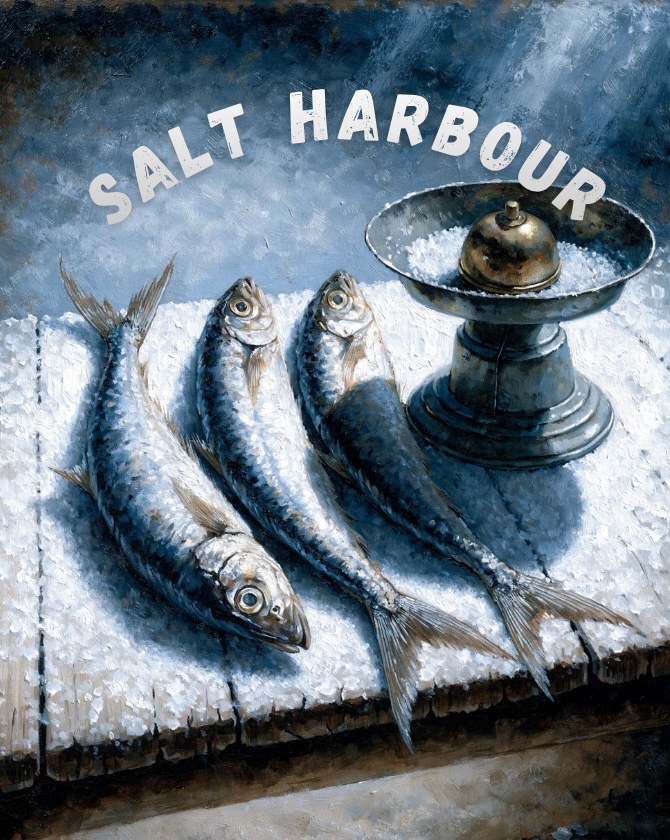
Mira has run the Osprey — a thirty-seat restaurant on the Gambian coast — for eleven years. She knows the price of ice, the margin on grilled ladyfish, the rhythm of the herring boats. She knows that her collateral arrangement with the bank was signed in 1987, when interest rates were someone else's weather. She has never had reason to read the fine print. Then the Central Bank raises its benchmark rate by two hundred and fifty basis points, and Mira's monthly payment climbs from four hundred and twelve dalasi to five hundred and seventy-seven — a forty percent increase she cannot absorb. The bank sends a repricing notice. She has thirteen days. The herring season — her only chance at enough cash flow to survive the quarter — is seven to ten days out, and the boats aren't talking. Mira does not understand monetary policy transmission. She is about to. What begins as a fight to keep a restaurant becomes a close reading of the machinery that connects a central banker's decimal point to a woman's ice bill — and the question of what, exactly, collateral means when the thing being held is the only life you've built. A novel of macroeconomics, coastal survival, and the distance between a rate decision and a kitchen floor.